Restoration

Photo: Joe Rudolph/Wolf Water Resources

Restoring Healthy Streams

Click to view the full map

Many of Central Oregon's iconic rivers and streams – the Deschutes, Metolius, Whychus, Tumalo – provide clean water, recreational opportunities, and vital habitat for native fish and wildlife. Over the past 150 years, water management, dams, and population growth have degraded these ecosystems by altering wetlands, reducing water quality and quantity, and fragmenting habitat. Without long-term restoration and management, neither communities nor ecosystems can truly thrive.

At the Watershed Council, we believe collaboration is key to restoring river health. By improving water quality, increasing water quantity, enhancing habitat, and encouraging stewardship that balances ecological and human needs, we've made measurable progress.
Over the past 25 years, our partnerships with local, state, and federal groups have helped build a cleaner, healthier, and more resilient Deschutes basin.

Identifying the Needs of our Watershed

Our restoration program has identified key priorities for habitat restoration across the watershed. Use the dropdown menus below to learn more about each sub-basin’s priorities.

Middle Deschutes

  • Restore a more natural hydrograph (i.e., increased summer streamflow).
  • Provide fish passage and screening at dams and/or diversions, primarily on tributaries.
  • Protect and restore a healthy stream corridor (including protection and/or restoration of wetlands, in-stream habitat, riparian and floodplain areas).
  • Reduce summer water temperature on Lake Creek.

Upstream of the City of Bend

  • Restore a more natural hydrograph (i.e., increased winter streamflow and decreased summer streamflow).
  • Protect and restore a healthy stream corridor (including protection and/or restoration of wetlands, in-stream habitat, riparian and floodplain areas).

City of Bend Area

  • Protect and restore a healthy stream corridor (including protection and/or restoration of wetlands, in-stream habitat, riparian and floodplain areas).
  • Manage stormwater to reduce pollutant inputs into the Deschutes River.
  • Restore fish passage at the existing dams.

Little Deschutes

  • Restore a more natural hydrograph (i.e., increased winter streamflow and decreased summer streamflow).
  • Protect and restore a healthy stream corridor (including protection and/or restoration of wetlands, in-stream habitat, and riparian and floodplain areas).
  • Restore a more natural hydrograph (i.e., increased summer streamflow).
  • Provide fish passage and screening at dams and/or diversions.
  • Protect and restore a healthy stream corridor (including protection and/or restoration of wetlands, in-stream habitat, riparian and floodplain areas).

Restoration over the Years

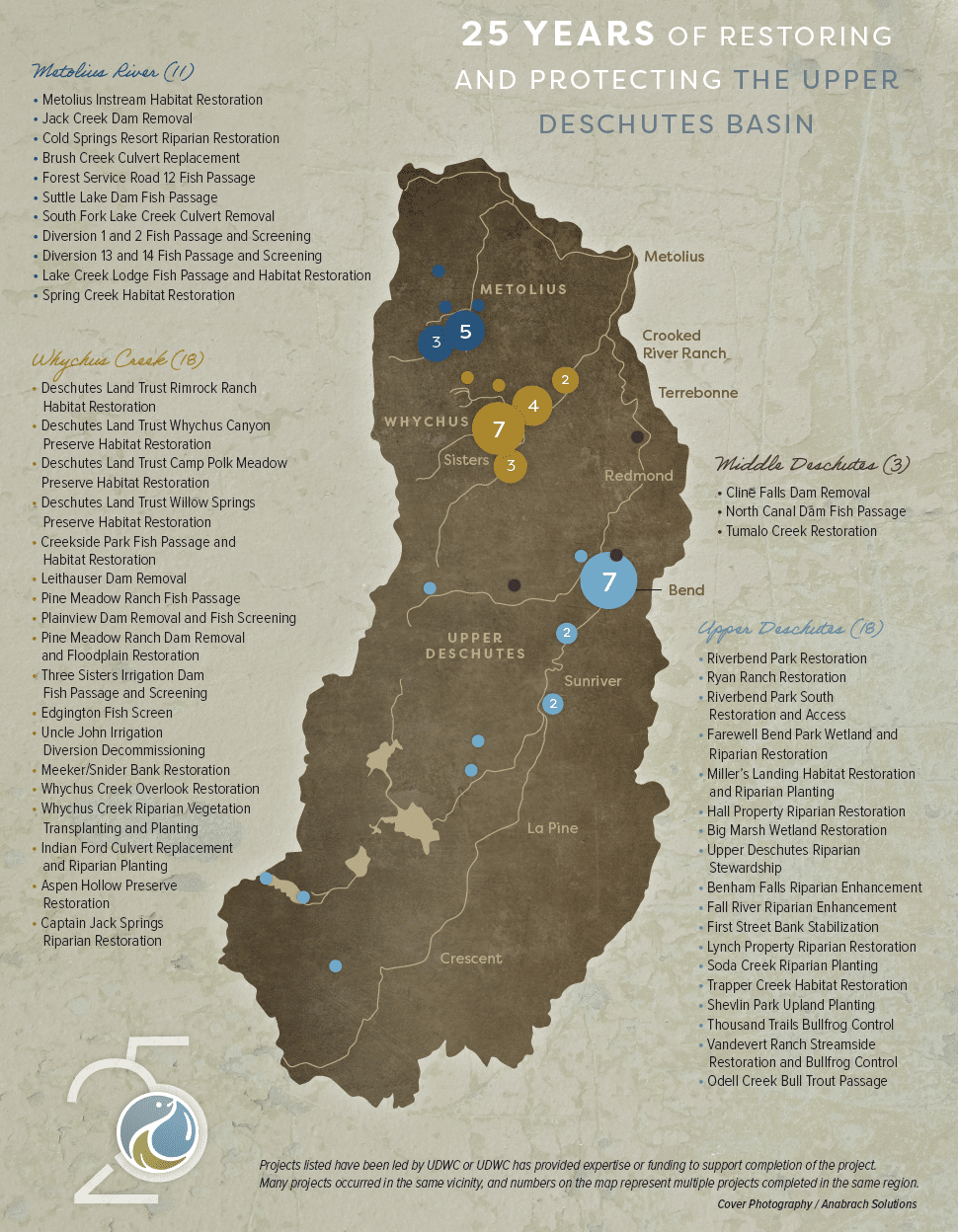
Over the past 25 years, our restoration program has completed or supported over 50 habitat restoration projects in the basin. We invite you to explore the interactive map below to learn about each project, including photos and videos that highlight projects before, during, and after restoration.

To see a list of all of our projects, please click the white arrow on the top left of the map. You can also view this map on a separate web page by clicking the white brackets on the top right of the map.

For any questions about our restoration work, please contact our Restoration Program Manager, Mathias Perle, or our Restoration Project Manager, Casey Schuder.